One of the cute and loving birds in the pet world is the lovebird, and many new owners quickly search for the male vs female lovebird difference to understand their pet better. Their cheerful personality, the nature of bonding, and their bright colors make them a favorite with lovers of birds. But the most confusing aspect of having a lovebird is determining whether or not your bird is a male or a female. There is no distinct gender difference between lovebirds, unlike in many other birds, and both sexes appear pretty similar. This usually makes new owners make assumptions about the gender by their behavior or appearance, which may not necessarily be true.
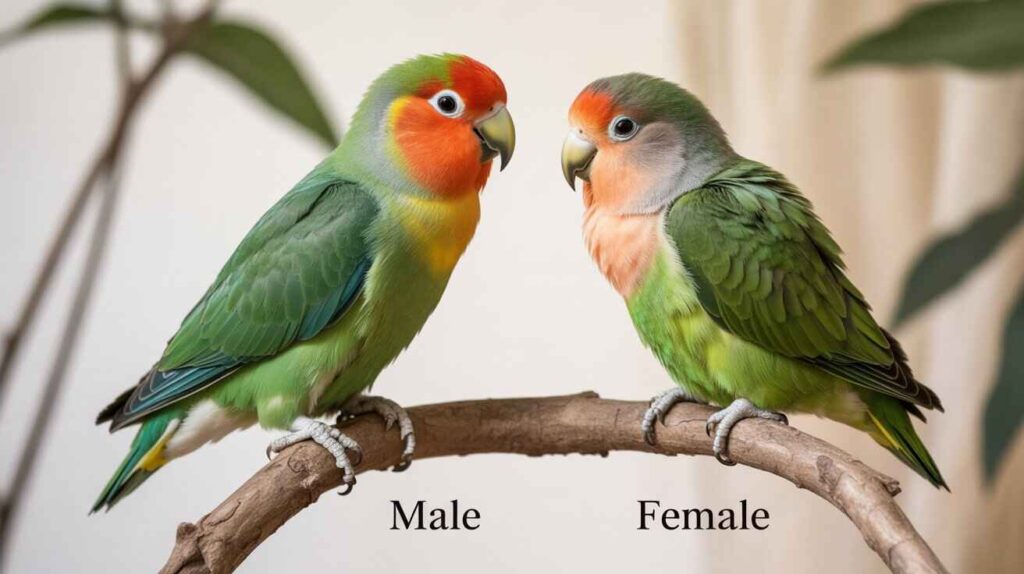
Although DNA testing is the surest method, there are also numerous clues to the physical and behavioral patterns to guide you to the male vs female lovebird difference and help you understand the distinction between the male and female lovebird. This article identifies these features one by one in an effort to enable you to easily identify the sex of your lovebird.
1. Physical Appearance Differences
Though lovebirds appear to be nearly similar at first sight, there are small body parts that can be used to differentiate between male and female, which helps in understanding the male vs female lovebird difference.
Head Shape
The shape of the head is one of the most basic visual cues.
- The head of the Male lovebirds is more rounded and domed.
- Female lovebirds have a generally flatter and broader head, more so at the top.
This disparity is more evident when one looks at two birds together.
Body Size & Shape
Another good clue is the body structure.
- Males are generally leaner, smaller, and seem slightly tighter.
- Females tend to be broader, heavier, and stronger-looking.
The reason why females are more likely to appear muscular is that they are biologically ready to lay eggs even in the absence of a male.
Pelvic Bone Gap
This is among the most common physical techniques that are applied by breeders.
- Male pelvic bones make close contact, and there is minimal space between them.
- The pelvic bones of females are further apart to permit the laying of eggs.
This procedure must be undertaken in a soft manner and by a seasoned individual. Placing pressure in the wrong places can damage the bird.
2. Behavioral Male vs Female Lovebird Difference
Lovers exhibit a lot of behavioral patterns that can tell a lot about their gender, which also helps in understanding the male vs female lovebird difference. These indications are not necessarily 100 percent effective, but they are extremely useful along with physical evidence.
Aggression & Territorial Behavior
Female lovers tend to be more commanding and possessive.
- Female can be more fierce about protecting their nest or cage.
- Males are typically peaceful, gregarious, and more manageable.
Nesting Habits
It is among the behavioral indicators that are most dependable.
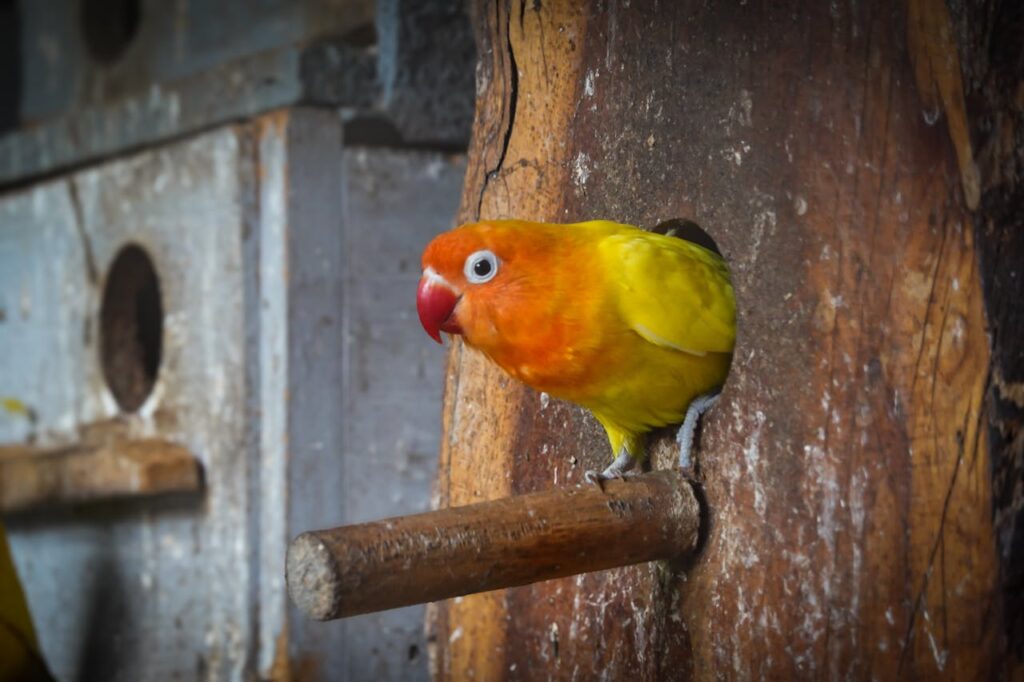
- Females have strong nesting instincts. They tear paper and make long strips, and usually stuff the bits under their wings to nest.
- Males can assist in chewing, and they would hardly display the same organization or nesting activity.
It is a maternal instinct of a female to nest even in the absence of a male.
Social Interaction
Lovers create close pair connections, and their communication can reveal their gender.
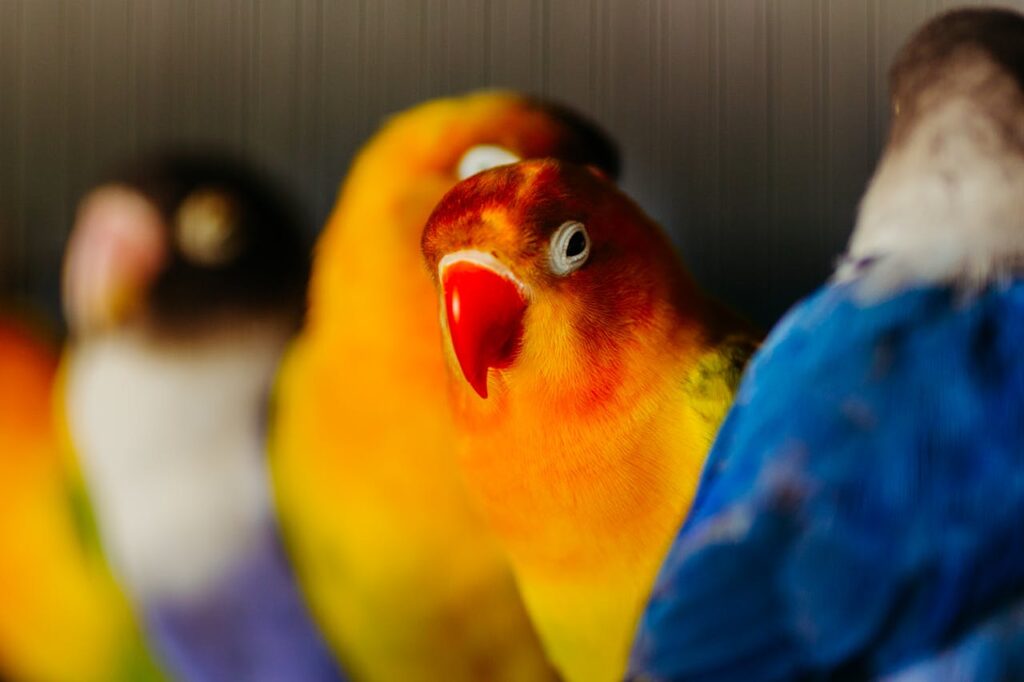
- Male love birds tend to feed their mate and mate with them more.
- During nesting, females are generally fed, particularly in the time before a nest.
Vocal Behavior
Even the males and females vary in vocalization.
- Males are also more vocal, more melodic, and frequent in their singing.
- Females produce shorter and sharper sounds that are less varied.
When your lovebird tends to chirp, whistle, or in any way attempt to imitate sounds, it is a male.
3. Pairing Behavior in Lovebirds
In keeping lovebirds in pairs, the bonding behavior is another thing that can be observed to give hints on the gender of the birds and can also help you understand the male vs female lovebird difference.
- The male becomes the caregiver of the pair in most cases, often feeding them.
- The female becomes more dominant and picks nesting sites and organizes materials.
These patterns can, however, differ in same sex pairs, and behavior is not the only tool that can be applied.

4. Color Mutation Differences
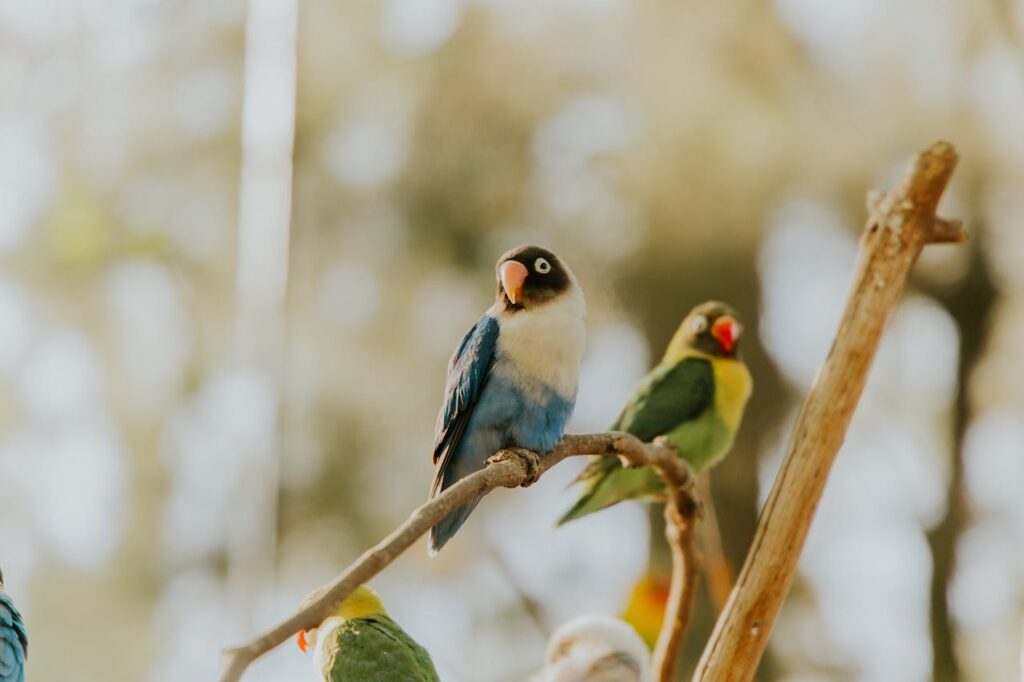
Some of the species of lovebirds, such as the Peach-faced lovebird, exhibit practically no visual sex differences. Fischer and Masked lovebirds can, however, exhibit a slight variation in color between males and females, but this is not a sure way. In the majority of species, gender cannot be determined by visual color, which makes understanding the male vs female lovebird difference more challenging.

5. DNA Testing (The Most Accurate Method)
Behavior and physical appearance are two things that can help you guess the gender, yet they are not always reliable, especially when trying to understand the male vs female lovebird difference. DNA testing is the only sure way of establishing whether your lover is a male or a female. It is possible to perform this test with the help of feathers, eggshells, or a blood sample. The findings are fast and dependable, and hence suitable for novice owners or breeders.
Conclusion
It is not always easy to tell the difference between the lovebirds of male and female gender, and this is most difficult to do by beginners, especially when trying to understand the male vs female lovebird difference. Nevertheless, you can be sure that it is a guess by considering the shape of their heads, the size of their bodies, the shape of their pelvic bones, and their behavioral patterns. Women are mostly territorial and nesters, whereas the males are vocal and social.

Nonetheless, DNA testing is the most effective one, which is why one can be sure. The difference in genders (male vs female lovebird difference) is not only to take care of properly, but also to provide a healthier and happier environment for your lovebirds.